
Checking for a Warrant in South Mountain
South Mountain has no verified city-level public search channel in the reviewed material. For a county citation or missed setting, identify the justice precinct on the court paper and contact that clerk. If a county arrest matter is involved, the Coryell County Sheriff can route a service inquiry, while the issuing court answers whether its warrant remains in force.
- Locate the court and cause number printed on the citation or order.
- Use the county justice-court precinct directory to identify the clerk who holds that file.
- Ask the clerk whether the docket shows a warrant, capias, reset, or pending appearance.
- Call the Coryell County Sheriff for county service or custody routing, not as a substitute for the judge's record.
- Consult counsel before taking action on a confirmed warrant or missed setting.
South Mountain Warrant Routing Starts With the JP Map
A county justice-court map can help match a South Mountain address or citation to the correct precinct. The assigned court matters because each JP keeps its own docket and issues its own process. A countywide search cannot replace that assignment, and a resident should not select a precinct simply because its office is closest.
Read the court caption on the document first. If it is missing, ask the county directory or clerk to identify the precinct from the case information before requesting a status check.
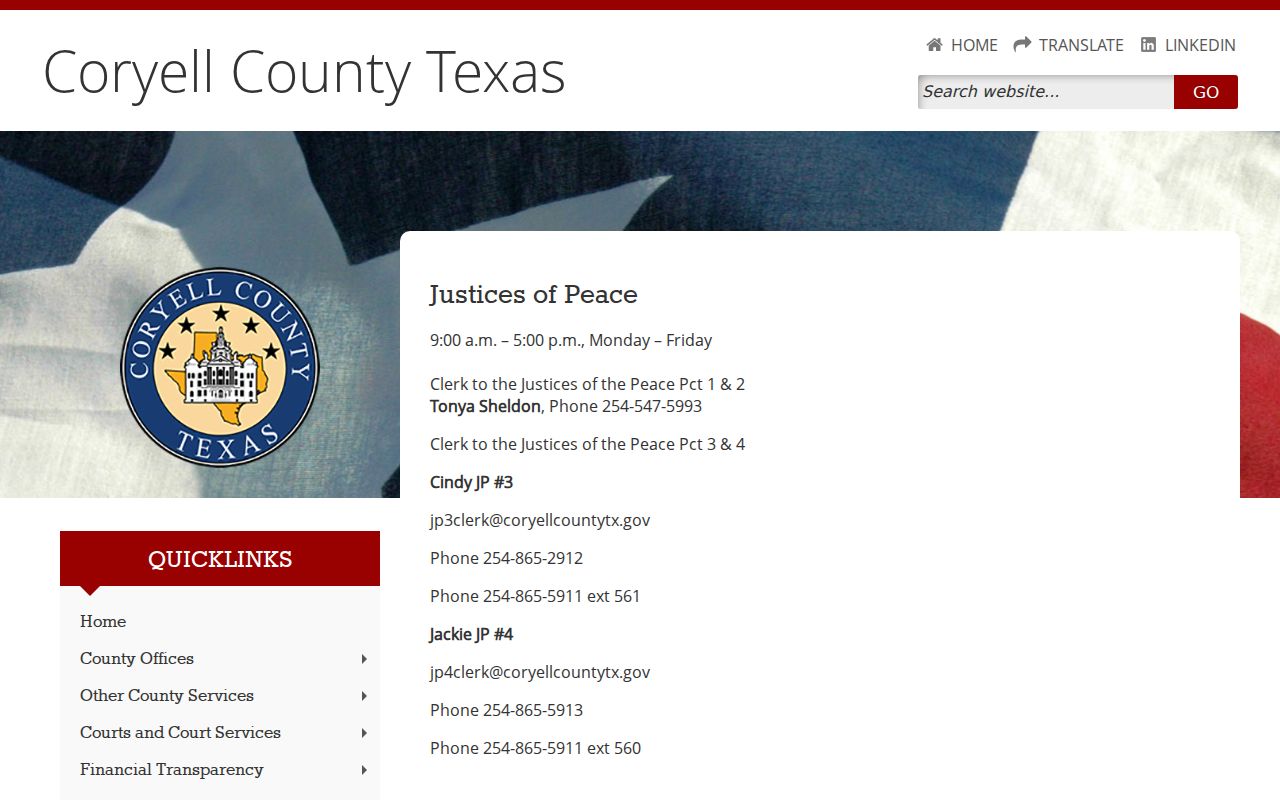
The county justice-court directory lists precinct routes; call the assigned clerk to verify the case.
South Mountain Police and Municipal Court
Official county material reviewed does not list a standalone South Mountain police warrant desk or a municipal-court search portal. That makes the court name on the citation especially important. A JP case routes to the assigned justice clerk; county criminal process may involve the district or county clerk and the sheriff.
Do not assume that a county sheriff search includes every precinct case or that a town-related citation is a municipal matter. The office that issued the record is the one that can identify its status.
South Mountain Has No Verified City Warrant Counter
The reviewed source set gives no separate South Mountain court address, city warrant form, or police records phone number. Use the county directory rather than relying on a map search result for a local office. If the notice identifies a city agency elsewhere, follow the issuing agency named in that document.
When there is no citation or docket number available, the sheriff's office can direct a person to the correct county record holder. That routing help does not make the sheriff the clerk of every case; a justice court or district court still controls its own entries.

Start at the official county website for current office directories.
South Mountain Warrant Types
Without a documented city court, the useful distinction is the kind of court process listed in the county record. A missed JP appearance may lead to a bench warrant or capias; a capias pro fine concerns an unpaid judgment and is legally distinct from a new arrest warrant. A serious criminal charge follows its own magistrate and court route.
| Warrant Type | How It Arises | Who Issues It |
|---|---|---|
| Traffic or JP case process | Missed date or unanswered citation in a precinct court | Assigned justice court |
| Bench warrant | Failure to comply with a court's appearance order | Judge handling the case |
| Capias pro fine | Unpaid judgment after required notice and process | Court that entered the judgment |
| Arrest warrant | Separate criminal charge approved by a magistrate | Issuing magistrate or court |
South Mountain Warrant Types Include a Distinct Capias
A capias pro fine is process used to enforce an unpaid fine or judgment after the required court steps. It is not simply another label for an arrest warrant issued on a new criminal allegation. The distinction affects which file to request and what the court can tell a person about payment, discharge, or a hearing.
Ask the JP or other issuing court for the underlying judgment and the exact process entered. Chapter 45A governs relevant municipal and justice-court procedures; the court can explain which provisions apply to the specific case.
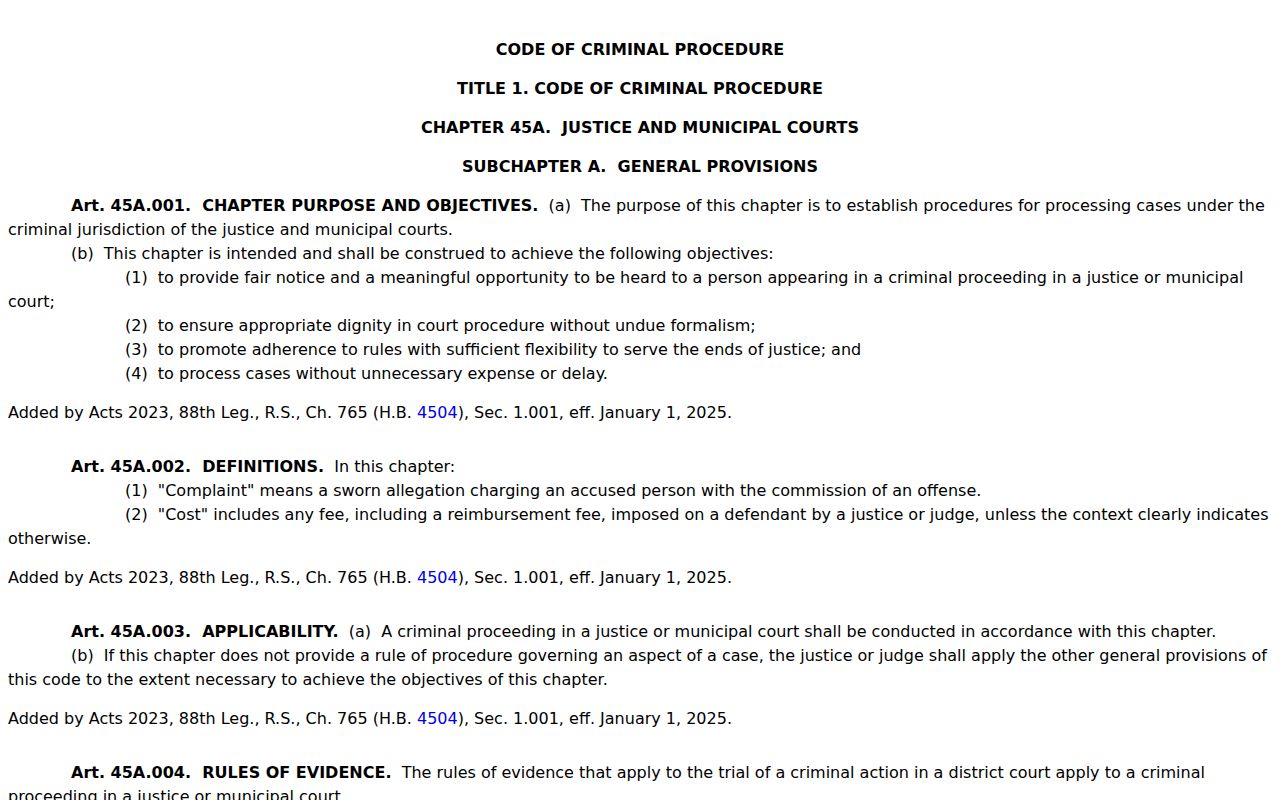
Review the official Chapter 45A text and ask the issuing court about a particular judgment.
Inside a South Mountain Warrant Record
A county warrant entry should be read alongside its underlying cause and issuing court. The county's public sources do not describe a South Mountain-specific record format, so use the field names provided by the JP or clerk. A warrant entry, an unpaid fine, and a service return may be separate documents.
| Cause number | Use it to retrieve the exact JP or criminal docket tied to the entry. |
|---|---|
| Party details | Check identifying information with the clerk; a matching name alone may be insufficient. |
| Underlying matter | Determine whether the process concerns a traffic citation, judgment, or separate charge. |
| Issuing court | Confirm the justice precinct or other court that entered the order. |
| Bond or fine | Ask which amount applies and whether the court requires another step. |
| Service and status | Verify the current court entry and any return with the correct record custodian. |
Constable Returns Add a Service Record
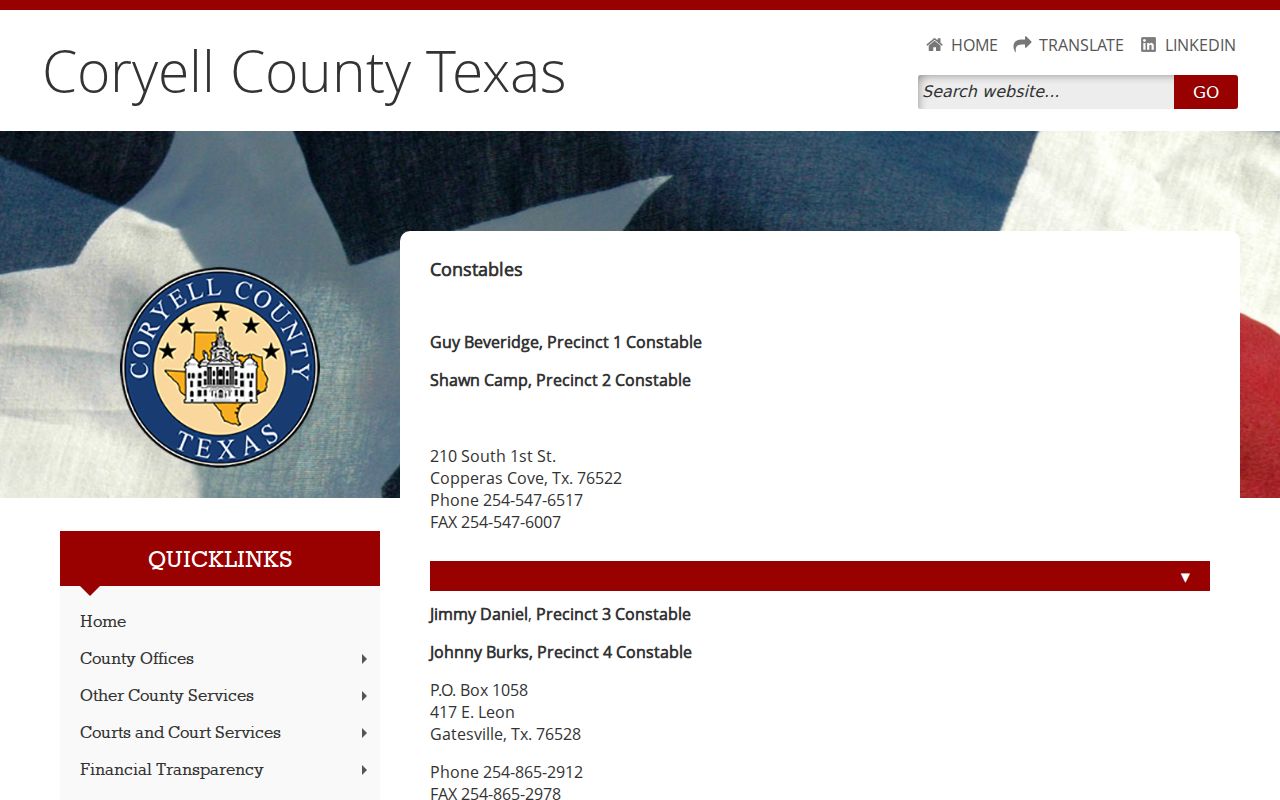
Constables execute and return process for courts in their precincts. A return may show that service was attempted or completed; it is not the same as the judge's warrant order and does not by itself close a case. Ask the issuing clerk whether a later court entry changed the process.
For South Mountain-related county matters, use the official constable directory to identify the relevant precinct office. Contact that office for a service question, then confirm warrant status with the issuing court.
How South Mountain Warrants Fit the County System
South Mountain-related county process follows the issuing JP, county, or district court and may be served by a constable or sheriff's deputy. DPS and OmniBase are limited to qualifying traffic-citation compliance matters; neither provides a complete Texas warrant confirmation service.
Warrant flow: South Mountain case paperwork › Coryell County court assigned by venue › constable or sheriff for service questions
For the countywide route, see Coryell County warrant records and how to check county records. Verify the court before relying on a statewide license-status result.
DPS Compliance Holds Are a Separate Check
Texas DPS and OmniBase are relevant when a qualifying traffic citation remains unpaid or unanswered and triggers a license-related hold. They do not search every arrest warrant, bench warrant, or capias. A person should ask the issuing court whether a hold is tied to the case and separately confirm whether any court process remains active.
Do not treat a clear license record as proof that no warrant exists. County court status and driver-license compliance are maintained through different systems.
South Mountain Warrant Records and Public Access
Request county records from the office that holds them: the sheriff for its reports, the assigned justice clerk for a JP docket, or the higher court clerk for a district case. Some records are confidential or sealed, so the custodian may redact or withhold information. A general online search does not override those access rules.
Key Rules:
Texas Public Information Act - Chapter 552 describes the public's request process for information held by covered agencies, with lawful exceptions.
Texas Code of Criminal Procedure, Chapter 45A - the statute sets procedures for applicable justice and municipal court cases.
Texas Family Code, Chapter 58 - juvenile justice files can carry confidentiality limits.
County Clerk Contacts Depend on the Case Level
A South Mountain address does not tell a clerk which docket to search. Justice-court cases go to the assigned JP, felony records to the district clerk, and sheriff reports to the law-enforcement records channel. The paperwork's court name and cause number help keep those requests from crossing office boundaries.
If a request concerns a warrant's current status rather than a copy of a document, ask the issuing court how it confirms live docket entries. Keep any written response with the case papers and follow the court's instructions for a hearing or recall request.